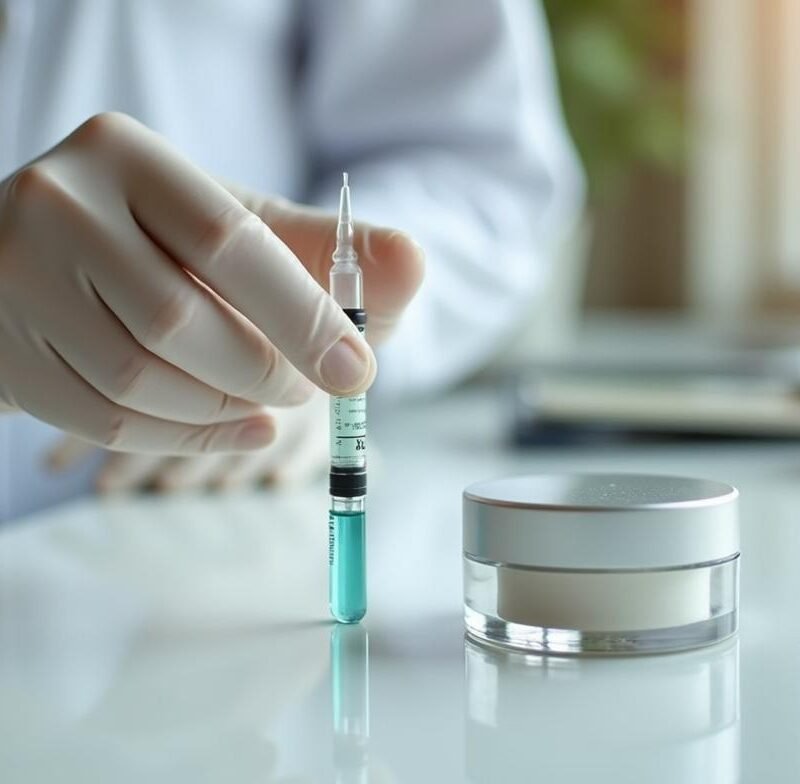
Peptides show up in two very different beauty conversations. One happens in the bathroom, with serums and moisturizers that claim to smooth, firm, or support the skin barrier. The other happens in clinics, med spas, or online wellness spaces, where injectable peptides may be promoted for body composition, tanning, recovery, libido, or “anti-aging.”
Those two categories are not interchangeable. The key difference is exposure: peptide skincare works mostly at the skin surface, while injections put compounds into the body. That changes the expected results, safety standards, oversight, and risk level.
If you are comparing peptide skincare vs peptide injections, the right choice depends on your goal, your health status, and whether the product has credible evidence for that specific use.
What peptides are doing in skincare
Peptides are short chains of amino acids. In skincare, brands use them in leave-on products like serums, creams, and eye treatments. Common cosmetic peptides include palmitoyl pentapeptide-4, copper tripeptide-1, acetyl hexapeptide-8, and signal peptides that target visible signs of aging.
Topical peptides do not rebuild your face overnight. Most cosmetic formulas aim to improve hydration, support the skin barrier, and soften the look of fine lines. In many studies, visible changes take 8 to 12 weeks of daily use. That timeline is similar to other non-prescription actives that work gradually.
The American Academy of Dermatology notes that moisturizer and sunscreen are the two most effective anti-aging products you can buy. Peptides may add benefits, but they work best in a routine that already includes broad-spectrum SPF 30 or higher each morning.
How topical peptides reach the skin
The outer skin barrier, called the stratum corneum, blocks many large or water-loving molecules. That makes peptide delivery difficult. Cosmetic chemists often attach fatty acids, use encapsulation, or combine peptides with humectants to improve contact with the upper layers of skin.
Most skincare peptides do not penetrate deeply enough to act like injected medication. Their effects usually come from hydration, surface smoothing, barrier support, or signaling activity near the upper skin layers. Product design matters more than a long ingredient list.
A useful peptide serum usually sits in the 0.1% to 5% active range, though labels rarely disclose exact percentages. Look for peptides listed before the final preservative cluster. If a peptide appears after fragrance, dye, or several botanical extracts, it may be present at a tiny level.
What peptide injections are
Peptide injections place a peptide under the skin, into muscle, or through another medical route. This can create systemic exposure, meaning the compound may affect organs, hormones, appetite, blood sugar, blood pressure, or immune activity.
Some injectable peptide drugs are legitimate prescription medicines. Examples include insulin, glucagon-like peptide-1 receptor agonists, and certain fertility or endocrine drugs. These are not the same as unapproved “research peptides” sold online for wellness use.
The U.S. Food and Drug Administration has warned consumers about unapproved peptide products, especially compounded or online-sold injectables marketed without proper review. FDA approval matters because it requires evidence on identity, purity, dosing, manufacturing, safety, and effectiveness for a specific indication.
Medical peptides versus wellness peptides
Prescription peptide drugs have defined indications and dosing schedules. A clinician may monitor labs, symptoms, contraindications, and interactions. For example, some metabolic peptide drugs require dose titration over several weeks to reduce nausea and other side effects.
Wellness peptides often live in a different category. Products such as BPC-157, ipamorelin, CJC-1295, or melanotan II may be advertised for recovery, fat loss, tanning, or “optimization.” Many lack FDA approval for those consumer uses. Some also appear on anti-doping watchlists or prohibited lists in sport.
The U.S. Anti-Doping Agency warns athletes that peptide hormones, growth hormone secretagogues, and similar substances can violate sport rules. That matters even if a product comes from a clinic or is labeled “research use only.”
Results, timing, and evidence
Topical peptides usually offer subtle cosmetic changes. A person might notice softer texture within 2 to 4 weeks because moisturizers improve hydration quickly. Fine-line changes, if they occur, often need 8 to 12 weeks of consistent use.
Injections can create stronger biological effects because they bypass the skin barrier. That does not automatically mean better for beauty. It means the potential effect and the potential harm both increase.
| Factor | Peptide skincare | Peptide injections |
|---|---|---|
| Main route | Applied to skin | Delivered into the body |
| Typical goal | Hydration, texture, fine lines | Medical treatment or systemic wellness claims |
| Timeframe | 4 to 12 weeks | Days to months, depending on drug |
| Oversight | Cosmetic rules | Drug, compounding, or medical rules |
| Risk level | Usually low | Higher, especially if unapproved |
| Best evidence | Barrier support and cosmetic appearance | Strong only for approved medical uses |
What evidence is strongest
The strongest evidence for peptides exists in approved medicines, not in broad anti-aging injection claims. FDA-approved peptide drugs go through clinical trials and manufacturing controls. Those standards do not apply to every product promoted by med spas or online sellers.
For skincare, evidence is usually product-specific. A finished formula matters because penetration, stability, pH, packaging, and peptide type all change performance. A peptide ingredient study does not prove every cream containing that peptide will work.
Cosmetic claims also have limits. In the United States, the FDA regulates cosmetics differently than drugs. A cream can claim to improve the appearance of wrinkles, but a product that claims to change body structure or function moves into drug territory.
Safety differences to take seriously
Peptide skincare can irritate sensitive skin, especially when paired with retinoids, exfoliating acids, or fragranced products. Redness, stinging, or bumps within 24 to 72 hours suggest irritation or allergy. A patch test on the inner arm for 3 nights can catch many obvious reactions.
Injectable peptides carry added risks. These include infection, sterile abscess, dosing mistakes, allergic reactions, contaminated vials, and unexpected hormone or metabolic effects. Any injection that breaks the skin also needs sterile technique and safe needle disposal.
Compounded injectables deserve extra caution. The FDA has identified safety concerns with some compounded drug products when ingredients, potency, sterility, or prescriber oversight fall short. Compounding can be appropriate in specific medical cases, but it does not equal FDA approval.
Red flags before using injections
Be cautious if a seller refuses to name the exact peptide, dose, pharmacy, lot number, or prescriber. Also pause if the product is labeled “not for human use” while someone recommends injecting it. That label often signals a research chemical, not a patient-ready medicine.
Avoid injections marketed as a stack with vague promises like “healing,” “longevity,” or “cellular repair.” Specific medical claims need clinical evidence for that condition. A responsible clinician should discuss diagnosis, contraindications, side effects, follow-up, and alternatives before prescribing.
Needle use also creates practical risks. The CDC recommends single-use sterile needles and proper sharps containers for used syringes. Reusing needles or sharing supplies increases the risk of bacterial infection and bloodborne pathogens.
Which option fits your situation?
Choose peptide skincare when your goal is cosmetic and surface-level. It fits mild dryness, early fine lines, rough texture, or barrier support. It also fits people who want a low-risk add-on beside sunscreen, moisturizer, retinoids, or vitamin C.
Consider a medical peptide injection only when there is a diagnosed condition and an approved or clinically justified treatment. That means a licensed prescriber, a clear dose, a known product source, and monitoring. It does not mean buying vials from social media, gym forums, or “research” websites.
Good fit for skincare
Skincare is the better match if you want gradual changes without downtime. It also works well if you are pregnant, nursing, managing chronic disease, or taking multiple medications, though you should still check ingredient safety with a clinician in those cases.
A practical routine can stay simple. Use a peptide serum or moisturizer once or twice daily, then apply SPF 30 or higher every morning. If you also use retinoids, place peptides on alternate nights at first to reduce irritation.
Good fit for medical supervision
Injection only makes sense when benefits outweigh systemic risks. Examples include approved peptide-based medicines for diabetes, obesity, fertility, endocrine disorders, or other diagnosed conditions. The decision should include medical history, current medications, baseline measurements, and follow-up timing.
Ask the prescriber for the peptide name, indication, dose in milligrams or micrograms, schedule, expected response window, and stop criteria. You should also know the dispensing pharmacy and whether the product is FDA-approved or compounded. If those answers are unclear, do not start.
Buying and using products wisely
For skincare, pick opaque or airless packaging when possible. Peptides can degrade with light, air, or repeated contamination from fingers. A fragrance-free formula is often better if you have rosacea, eczema, acne-prone skin, or a damaged barrier.
One peptide product is enough at first. Use it for 8 weeks before judging results, unless irritation appears earlier. Taking well-lit photos every 2 weeks gives a more honest view than daily mirror checks.
For injections, the buying decision should happen inside medical care, not at checkout on an online peptide site. Ask whether the treatment follows state medical board rules and whether adverse events have a reporting process. Legitimate care should never require guessing what is in the vial.