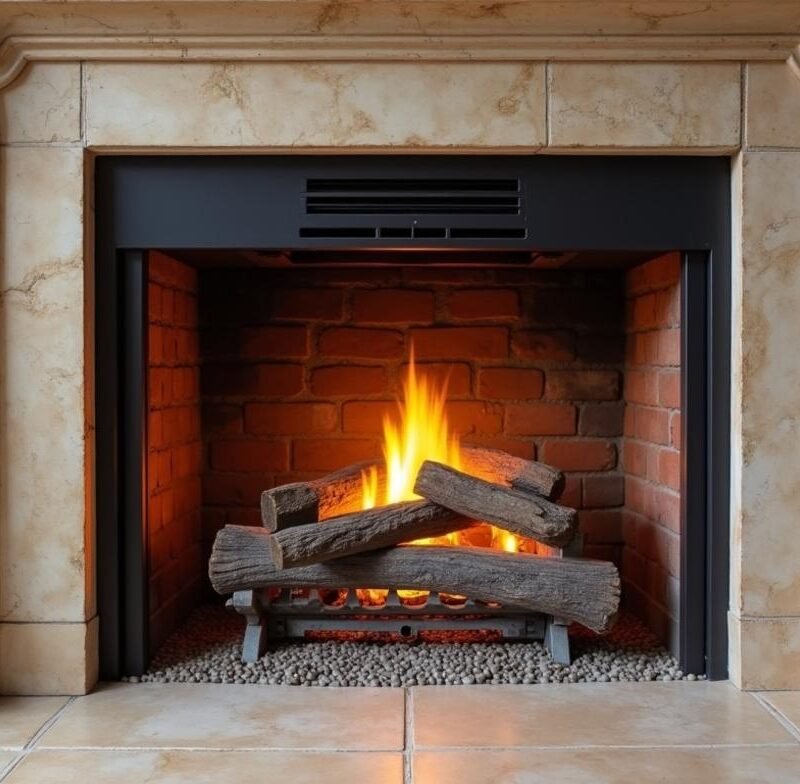
Older homes often have masonry fireplaces that look beautiful but perform poorly. Many were built for occasional open fires, not steady heat. A typical open fireplace can pull 200 to 400 cubic feet of heated room air up the chimney each minute, according to the U.S. Department of Energy.
The right insert can turn that old firebox into a controlled appliance. The challenge is matching the insert to the chimney, room size, fuel access, and historic materials around the hearth. These fireplace insert options work best when you start with measurements, not style photos.
Start with the existing fireplace and chimney
Measure the firebox before shopping. Record the front width, rear width, height, depth, hearth extension, and flue opening. Many older masonry fireplaces taper toward the back, so the rear width can limit the insert size even when the front looks generous.
Most inserts need a stainless steel liner that runs from the appliance to the chimney top. The Chimney Safety Institute of America recommends a Level 2 inspection when changing fuel type, relining, or installing a new appliance. That inspection checks hidden flue damage, improper clearances, and old mortar failure.
Clearance matters around mantels and trim. Older homes often have wood mantels, plaster, or built-in bookcases close to the opening. NFPA 211 sets guidance for chimneys, fireplaces, vents, and solid-fuel appliances, including clearance rules and liner requirements.
Measurements that often decide the project
A compact insert may need only 20 to 24 inches of firebox height. Larger wood inserts often need 25 to 30 inches. Depth commonly falls between 14 and 20 inches, though many Victorian and Craftsman fireplaces are shallower.
Hearth extension also matters. For many solid-fuel inserts, the noncombustible surface must extend 16 inches or more in front of the opening. Larger openings may require 20 inches. Manufacturer manuals control the final number.
Wood inserts for real heat
A wood-burning insert suits an older home with a sound masonry chimney and space to store fuel. It gives the most traditional fire experience. It also asks the most from the owner.
Modern EPA-certified wood inserts burn cleaner than old stoves and open fireplaces. The U.S. Environmental Protection Agency requires new wood heaters to meet particulate emission limits, with current certified models listed in its official database. Many units produce 60,000 to 80,000 BTU per hour, but actual room heat depends on layout and insulation.
A full stainless liner is usually the right choice. In older chimneys, oversized flues cool smoke too fast. That cooling creates creosote and weak draft. A properly sized 6-inch liner is common for many wood inserts.
When wood makes sense
Choose wood when the house has frequent winter use, a central gathering room, and easy access to seasoned fuel. Firewood should dry at least 6 to 12 months after splitting. Moisture content should be below 20 percent before burning.
Wood is a poor fit for rental properties, rarely used second homes, or owners who dislike ash removal. Expect regular glass cleaning, ash handling, and chimney sweeping. The National Fire Protection Association advises annual inspection of chimneys, fireplaces, and vents.
Gas inserts for control and convenience
Gas inserts work well in older homes where daily heat matters but firewood does not fit the lifestyle. They use sealed combustion in most modern models. That means the unit draws outdoor air for combustion and vents exhaust outdoors.
Direct-vent gas inserts usually use two flexible liners inside the existing chimney. One brings combustion air down. The other sends exhaust up. This setup helps avoid using heated room air for the flame.
Gas inserts often include thermostats, blowers, and remote controls. Heat outputs commonly range from 20,000 to 40,000 BTU per hour. A medium unit can serve a 500 to 1,000 square foot area, depending on ceiling height, insulation, and room openings.
The main decision cost is installation of gas service if the fireplace lacks it. Running a new gas line commonly ranges from $300 to $1,500, depending on distance, access, and local permit rules.
Best conditions for gas
Gas fits a home with natural gas or propane already available. It also suits owners who want heat during weeknights without carrying fuel. Many models start in seconds and modulate flame height.
It may not suit a home where preserving a true wood-fire character matters most. Some historic districts also restrict exterior vent caps on visible elevations. Ask the local building department before choosing a sidewall or chimney-top vent termination.
Vent-free gas in older homes
Vent-free gas inserts release combustion byproducts into the room. They are legal in some states and banned or restricted in others. California prohibits vent-free gas fireplaces in residential use.
Older homes can have air leakage, but that does not make vent-free units automatically safe. Combustion adds water vapor, nitrogen dioxide, and carbon monoxide risk if the unit fails or gets oversized. Many manufacturers limit operating time and room size.
Electric inserts for shallow fireplaces
Electric inserts solve problems that fuel-burning appliances cannot. They need no chimney liner, no combustion air, and no fuel storage. They can work in small coal-burning fireplaces common in homes built before central heating.
A standard 120-volt electric insert usually produces about 5,000 BTU per hour. That equals roughly 1,500 watts. It can take the chill off a 150 to 250 square foot room but will not replace a furnace.
Electric units also fit bedrooms, condos, and homes with damaged chimneys. If the old flue has cracks, missing mortar, or abandoned offsets, electric heat avoids a major masonry project. Flame effects can run with or without heat on many models.
When electric is the practical answer
Pick electric when the fireplace is decorative, shallow, or rarely used. It also works when the home has no gas service and wood storage is impractical. Installation can be as simple as adding a dedicated outlet if the circuit load allows it.
Older knob-and-tube wiring needs special caution. An electrician should verify grounding, amperage, and circuit condition. A 1,500-watt heater draws 12.5 amps on a 120-volt circuit.
Which insert fits which older-home situation?
The best choice depends on the fireplace, the home’s use pattern, and the owner’s tolerance for maintenance. A 1910 bungalow with a central masonry chimney may suit wood. A 1930s Tudor with gas nearby may favor direct vent.
| Situation | Best fit | Key condition |
|---|---|---|
| Large masonry firebox and strong chimney | Wood insert | Full liner and dry fuel available |
| Daily evening use | Direct-vent gas insert | Gas or propane access nearby |
| Small coal fireplace | Electric insert | Opening too shallow for fuel-burning units |
| Damaged flue and limited budget | Electric insert | No plan to rebuild or reline |
| Historic mantel close to opening | Gas or electric insert | Manual clearances can be met |
| Rural home with stored firewood | Wood insert | Annual sweeping and ash removal accepted |
Room layout matters as much as BTU rating. Inserts heat best when the fireplace sits in a room connected to adjacent spaces by wide openings. Long hallways, closed doors, and second floors reduce heat movement.
Use the 10-minute test during a site visit. Stand in the room and trace where warm air can move without fans. If the fireplace is in a closed formal parlor, even a strong insert may overheat that room first.
Permits, safety, and installation timeline
Most insert projects require a mechanical or building permit. Gas work usually requires a licensed plumber or gas fitter. Solid-fuel appliances may trigger stricter local rules because creosote fires can exceed 2,000 degrees Fahrenheit inside a chimney.
A typical project takes one to three days after the unit arrives. The visit often includes hearth protection checks, liner installation, block-off plate placement, appliance connection, and smoke or combustion testing. Custom surrounds or masonry repair can add one to two weeks.
Ask the installer for the appliance manual, permit record, liner warranty, and final inspection tag. Keep those documents with the house records. Future buyers, insurers, and chimney technicians will ask for them.