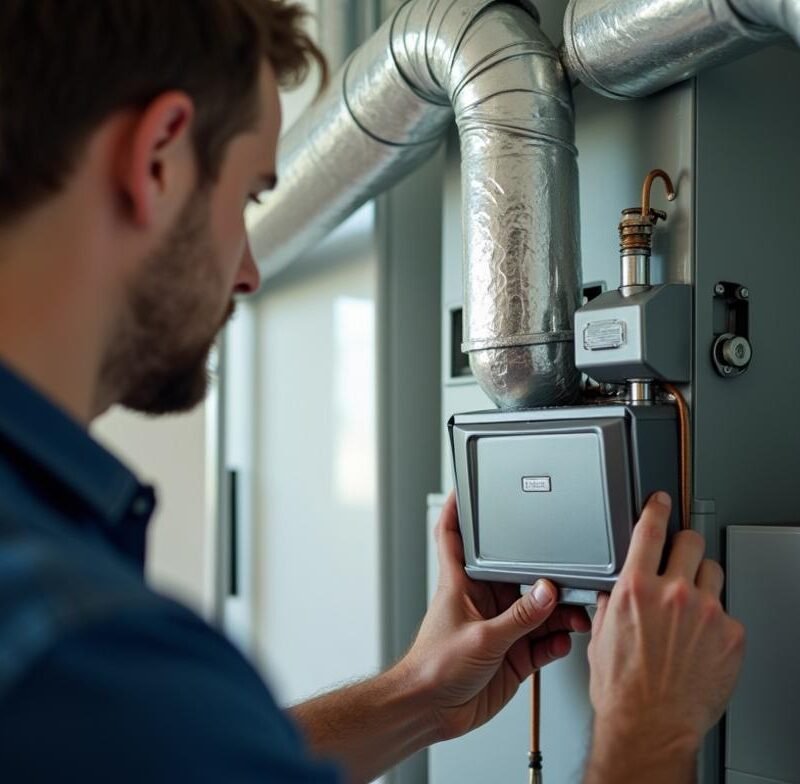
Dry indoor air shows up as static shocks, cracking wood trim, nose irritation, and rooms that feel chilly even when the thermostat reads 70°F. The problem often starts when cold outdoor air enters the home, gets heated, and loses relative humidity. In many homes, winter indoor humidity can fall below 25%.
The U.S. Environmental Protection Agency notes that indoor relative humidity is commonly kept between 30% and 50% to limit mold growth and comfort problems. ASHRAE guidance also treats moisture control as part of healthy indoor air management. For many forced-air homes, whole-home humidifier installation can solve dryness more evenly than portable units in bedrooms or living rooms.
Why heated homes get so dry
Cold air holds less moisture than warm air. When 20°F outdoor air enters through gaps, bath fans, kitchen exhaust, or normal ventilation, your furnace heats it quickly. The amount of water in the air may stay low, while the air’s capacity to hold water rises.
That change can push indoor relative humidity far below comfort levels. At 70°F, many people notice dry skin, irritated throats, and static electricity once humidity drops under 30%. Wood floors, cabinets, and musical instruments can also shrink when indoor humidity stays low for weeks.
Air leaks make the problem worse. Gaps around attic hatches, rim joists, recessed lights, and old window frames pull in dry outdoor air. A humidifier may help, but a leaky house often needs more water to hold the same humidity level.
What a whole-home humidifier does
A whole-home humidifier connects to the central heating system and adds moisture as air moves through the ductwork. A humidistat measures humidity, much like a thermostat measures temperature. Many modern controls also track outdoor temperature so the system can lower humidity during very cold weather.
Most systems connect to the home’s water line and either a supply duct or return duct. The furnace blower distributes humidified air through existing vents. That setup gives more even coverage than a portable tank unit in one room.
Bypass humidifiers
A bypass humidifier uses furnace airflow to move warm air across a wet evaporator pad. It usually mounts between the supply and return ducts with a 6-inch bypass duct. This type works best when the furnace runs regularly during dry months.
Bypass models use little electricity because they do not need their own fan. They do need duct space near the furnace and access to a drain or water collection path. Many homes between 1,500 and 3,000 square feet use this style.
Fan-powered humidifiers
A fan-powered humidifier has its own built-in fan. It can move air across the water panel without relying as much on duct pressure. This helps in tighter mechanical rooms or duct systems with limited bypass space.
Fan-powered units usually produce more moisture than bypass models. They fit homes with larger floor areas, long duct runs, or comfort complaints in distant bedrooms. They still need yearly pad replacement and periodic cleaning.
Choosing the right type for your home
The right system depends on heating equipment, duct layout, water quality, and how dry the house gets. A small, tight home with mild winter dryness may not need the same output as a large, leaky home in a cold climate. The International Association of Certified Home Inspectors notes that humidity, ventilation, and poorly maintained equipment are common sources of comfort and air-quality problems, and that remedies involve ventilation, moisture control, and inspection rather than one single device.
Use the table below as a practical starting point.
| Option | Best fit | Key condition |
|---|---|---|
| Bypass evaporative | Average forced-air home | Furnace runs often and duct space allows a bypass |
| Fan-powered evaporative | Larger homes or weaker duct pressure | Need more moisture output without a bypass path |
| Steam humidifier | Homes needing humidity without heat calls | Good electrical capacity and strict maintenance habits |
| Portable room unit | Single room dryness | No central ducts or short-term rental situation |
A steam humidifier boils water and injects steam into the ductwork. It can operate even when the furnace is not heating, if the blower runs. Installed steam systems often cost more than evaporative options, commonly landing between $1,800 and $3,500 in many U.S. markets.
Humidity targets and moisture limits
The EPA recommends controlling indoor moisture because high humidity can encourage mold, dust mites, and condensation. A good winter target is often 30% to 40% relative humidity. Many homes can reach 45% in mild weather, but that may be too high during freezing conditions.
Outdoor temperature matters. When it is 10°F outside, some homes need indoor humidity closer to 30% to prevent window condensation. When it is -10°F, even 25% may be safer for older double-pane windows or poorly insulated walls.
Signs the setting is too low
Static shocks are one of the earliest clues. Dry nasal passages, scratchy throats, and gaps in wood flooring can follow. If several rooms feel dry and hygrometers read below 30%, the home likely needs more moisture or less air leakage.
Place small digital hygrometers in at least two rooms. Keep one near the main living area and one in a bedroom far from the furnace. Readings taken after 24 hours give better data than a single afternoon check.
Signs the setting is too high
Condensation on windows is the clearest warning sign. Water on glass, damp sills, or dark spots around window frames mean the air contains more moisture than cold surfaces can handle. Closets on exterior walls can also smell musty when humidity stays high.
Lower the humidistat by 5 percentage points if condensation appears. If moisture remains after two days, check exhaust fans, attic insulation, and window performance. A humidifier should not compensate for poor ventilation or hidden water leaks.
What installation involves
A contractor starts by checking the furnace, ducts, water access, drain options, and available electrical service. The humidifier must fit where a technician can change the pad or canister. Many evaporative units need around 12 by 15 inches of flat duct surface.
The installer cuts into the duct, mounts the cabinet, connects a water line, and wires the humidistat. Some controls mount on the return duct, while others connect to the thermostat. Outdoor sensors usually sit on a north-facing wall or another shaded location.
Water, drain, and electrical details
Most evaporative humidifiers use a 1/4-inch water line from a nearby cold-water pipe. Flow-through models send unused water to a floor drain, condensate pump, or approved drain line. Homes without a nearby drain may need a different model or added drainage.
Steam units need more electrical planning. Many require a dedicated 120-volt or 240-volt circuit, depending on output. Hard water can shorten canister life because minerals build up faster during boiling.
A typical installation takes 3 to 6 hours when the furnace area has workable access. Tight closets, finished basements, asbestos-containing materials, or missing drains can add time. The technician should test operation before leaving and show how to change humidity settings.
Maintenance and operating habits
Evaporative humidifiers need a new water panel at least once per heating season. Homes with hard water above 7 grains per gallon may need mid-season replacement. Mineral buildup blocks airflow and reduces moisture output.
Steam humidifiers usually need canister replacement or cleaning every 1 to 2 heating seasons. Some homes with very hard water need service sooner. Follow the manufacturer’s maintenance schedule because dirty electrodes or scaled tanks can stop steam production.
Check the humidistat setting every time outdoor temperatures change sharply. Lower it before a deep freeze and raise it again during milder weather. Keep bathroom fans working, use kitchen exhaust while cooking, and repair plumbing leaks quickly.
A humidifier works best after basic air sealing. Seal attic bypasses, weatherstrip leaky doors, and close gaps around penetrations before oversizing equipment. A balanced approach reduces water use, protects building materials, and keeps humidity closer to the range recommended by EPA and ASHRAE.