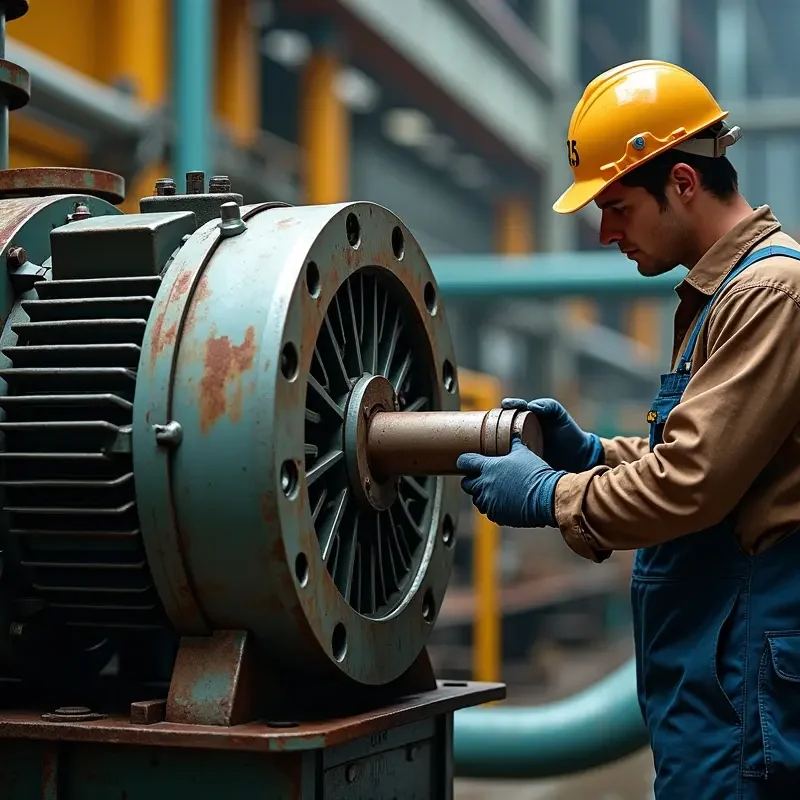
Variable Frequency Drives (VFDs) have changed how our industries operate. They are especially critical in the demanding world of oil gas motors. VFDs offer big benefits. They let us control motors with great accuracy. This saves energy and improves process control.
Yet, this powerful technology comes with a hidden challenge. It can create a paradox for system reliability. While VFDs boost efficiency, they can also cause unexpected motor failures. These failures lead to costly and unplanned downtime. This puts our entire operation at risk.
The core issue lies in how VFDs operate. They can generate electrical voltages on motor shafts. These voltages seek a path to ground. Often, they find this path through the motor’s bearings. This can cause tiny electrical arcs, damaging the bearing surfaces over time. This is the reliability tradeoff we must address.
We will explore this hidden threat. We will explain how VFDs can cause electrical bearing damage. More importantly, we will provide clear strategies to prevent it. Our aim is to help you achieve both energy efficiency and long-term motor reliability. We want to keep your critical operations running smoothly.
The Hidden Threat: How VFDs Cause Electrical Bearing Damage
The promise of Variable Frequency Drives in applications involving oil and gas motors is immense. From optimizing pump speeds in pipelines to precisely controlling drilling equipment, VFDs offer unparalleled control and energy savings. However, this advanced control comes at a cost, often manifesting as premature bearing failure due to electrical discharge machining (EDM). This phenomenon is a silent, insidious threat to motor longevity and operational continuity.
At the heart of the problem is the VFD’s method of operation. To achieve variable speed and torque, VFDs rapidly switch DC voltage to create a simulated AC waveform. This high-speed switching, while effective for motor control, generates common-mode voltage. This voltage is not part of the motor’s intended power circuit but rather an unwanted byproduct that appears between the motor’s neutral point and ground. When this common-mode voltage builds up on the motor shaft, it seeks the path of least resistance to ground, which, unfortunately, often leads through the motor’s bearings.
As the voltage accumulates, it eventually overcomes the dielectric strength of the bearing lubricant film. At this point, a sudden, high-frequency discharge occurs, creating a micro-arc that jumps from the shaft, through the rolling elements, to the bearing race. This is essentially an electrical discharge machining event, where tiny craters are formed on the bearing surfaces. Over time, these repeated discharges erode the smooth surfaces of the bearings, leading to characteristic patterns of damage.
The initial signs of this damage are often subtle, such as microscopic pitting. However, as the process continues, these pits coalesce and deepen, leading to a phenomenon known as “fluting” or “washboarding.” This pattern is characterized by a series of parallel, gray lines etched into the bearing race, resembling a frosted or sandblasted appearance in its early stages. Eventually, these flutes become distinct, visible grooves.
This damage significantly compromises the bearing’s ability to operate smoothly, leading to increased friction, liftd temperatures, audible noise, and ultimately, catastrophic failure. The lubricant itself also suffers, breaking down prematurely due to the localized heat generated by the electrical discharges, further accelerating wear.
Understanding the Failure Mechanism
To fully grasp the severity of this issue, we must dig deeper into the physics of VFD-induced bearing currents. The rapid switching of insulated gate bipolar transistors (IGBTs) within the VFD generates steep voltage pulses. These pulses, while necessary for creating the desired output waveform, also create parasitic capacitance between the stator and rotor, and between the rotor and the motor frame. This capacitance allows a portion of the common-mode voltage to couple onto the motor shaft.
When the voltage on the shaft exceeds the breakdown voltage of the thin lubricating film in the bearings, it discharges. This discharge creates a low-impedance path, essentially a miniature lightning bolt, through the rolling elements to the bearing race and then to the motor frame and ground. Each discharge event creates a microscopic pit or fusion crater. While individually minuscule, these micro-welds and subsequent material removals accumulate rapidly. Considering that VFDs can switch at frequencies ranging from a few kilohertz to tens of kilohertz, these damaging discharges can occur thousands of times per second.
The cumulative effect is a gradual but relentless degradation of the bearing surfaces. The once smooth, precision-machined surfaces become rough and uneven. This roughness increases mechanical wear, generates more heat, and causes the lubricant to degrade even faster. The cycle of damage accelerates, leading to a rapid decline in bearing health. This is particularly problematic in the oil and gas industry, where motors often operate under heavy loads, in challenging environments, and in critical applications where reliability is paramount.
The Connection to Unplanned Downtime
The direct consequence of VFD-induced bearing damage is premature motor failure. For operations relying on oil gas motors, this translates directly into unplanned downtime, which can be astronomically expensive. A single motor failure in a critical application—such as a pump moving crude oil, a compressor maintaining pipeline pressure, or a drilling rig’s drawworks—can halt an entire production process.
The costs associated with such failures extend far beyond the price of a new motor or bearing replacement. They include:
- Lost Production: The most significant financial impact, as every minute of downtime means lost revenue from extraction, processing, or transportation.
- Emergency Repairs: Expedited shipping for parts, overtime for maintenance crews, and specialized equipment rentals all contribute to higher repair costs.
- Safety Risks: A sudden motor failure, especially in hazardous environments, can pose significant safety risks to personnel and equipment.
- Reputational Damage: Delays in delivery or service can harm a company’s reputation and lead to contractual penalties.
- Secondary Damage: A failing bearing can lead to increased vibration, which can damage other motor components, connected equipment, or even the foundation.
In the oil and gas sector, where continuous operation is often non-negotiable, mitigating the risk of VFD-induced bearing damage is not merely a maintenance best practice; it is a fundamental requirement for operational resilience and profitability. Without effective protection, the very technology intended to improve efficiency and control ironically becomes a primary driver of costly, unpredictable failures.
A Proactive Strategy for Industrial Motor Maintenance
In the demanding environment of oil and gas operations, a robust and proactive maintenance strategy is not just beneficial—it’s essential. For oil gas motors, particularly those controlled by VFDs, a holistic approach that integrates both traditional mechanical checks and specialized electrical protection is crucial. Our goal is to shift from reactive repairs to predictive and preventive measures that safeguard asset longevity and operational continuity.
Traditional predictive maintenance techniques, such as vibration analysis, infrared thermography, and lubrication analysis, are invaluable tools. Vibration analysis helps detect mechanical imbalances, misalignment, and advanced stages of bearing wear. Infrared thermography can identify hotspots indicative of electrical issues, excessive friction, or poor connections. Lubrication analysis provides insights into the health of the oil, detecting contaminants and wear particles. These methods are foundational to any comprehensive maintenance program.
However, when VFDs are involved, these traditional methods often only detect the problem once significant damage has already occurred. By the time fluting is visible through vibration analysis, the bearing is already on a path to failure. Therefore, effective risk mitigation requires addressing the root cause of VFD-induced damage before it manifests as mechanical wear. This means incorporating electrical protection specifically designed to neutralize shaft currents.
A truly proactive strategy anticipates this unique electrical failure mode and implements countermeasures, enhancing overall system reliability and preventing the cascade of issues that lead to unplanned downtime.
Beyond Mechanical Checks: The Electrical Side of Industrial Motor Maintenance
While mechanical integrity, proper alignment, and effective lubrication are cornerstones of motor reliability, they represent only one side of the equation, especially for VFD-driven oil gas motors. The electrical environment created by VFDs introduces a distinct failure mechanism that traditional mechanical checks often miss until it’s too late. It’s an overlooked root cause that demands specific attention.
The electrical root cause of bearing damage—the circulating or common-mode currents—cannot be detected by simply checking grease levels or listening for unusual noises. It requires an understanding of the VFD’s interaction with the motor and the implementation of specialized electrical protection.
This electrical protection is a key component of a best-practice reliability strategy, especially for demanding applications where specialized AEGIS oil gas motor maintenance protocols are essential to prevent downtime. Ignoring this electrical dimension is akin to treating the symptoms without addressing the disease, leading to recurring failures despite diligent mechanical maintenance.
Integrating Electrical Protection into a Reliability Program
Successfully integrating electrical protection against VFD-induced bearing currents into an existing reliability program involves several strategic steps:
- Asset Identification: Identify all VFD-driven motors, prioritizing those in critical applications within the oil and gas infrastructure.
- Risk Assessment: Evaluate the potential for VFD-induced bearing damage based on motor size, operating environment, and historical failure data.
- Solution Selection: Choose appropriate shaft grounding technologies that are proven to effectively divert harmful currents away from bearings.
- Implementation Planning: Develop a phased plan for installing protective devices, considering operational schedules and resource availability.
- Training and Awareness: Educate maintenance personnel on the causes and effects of VFD-induced bearing currents and the importance of electrical protection.
- Monitoring and Verification: Implement procedures for periodically checking the effectiveness of the installed protection, including shaft voltage measurements where appropriate.
- Documentation and RCFA: Maintain detailed records of all installations, maintenance, and any remaining failures. Crucially, conduct Root Cause Failure Analysis (RCFA) for any motor failures to confirm the effectiveness of the protection and identify any other contributing factors.
By taking these steps, organizations can proactively manage the risks associated with VFD-driven motors, changing a potential vulnerability into a source of improved reliability. This integrated approach ensures that our asset management strategy is comprehensive, addressing all potential failure modes and securing the long-term performance of our critical oil gas motors.
Implementing Shaft Grounding for Long-Term Reliability
Having identified the threat and the need for electrical protection, the next logical step is to implement a proven solution. For VFD-driven oil gas motors, shaft grounding rings stand out as the most effective and widely adopted technology for preventing electrical bearing damage. These devices work by providing an ultra-low impedance path for shaft currents to safely discharge to the motor frame, bypassing the bearings entirely.
A shaft grounding ring typically consists of a conductive microfiber array embedded in a circular channel, which is then mounted onto the motor’s endbell. The microfibers make continuous contact with the motor shaft, creating millions of contact points that effectively “collect” the stray shaft currents. This conductive pathway diverts the damaging currents away from the bearings, safely channeling them to ground.
This simple yet ingenious mechanism ensures that the bearing lubricant film is never subjected to the destructive electrical discharges, preserving the integrity of the bearing surfaces.
The benefits of implementing shaft grounding rings are profound. They directly address the root cause of VFD-induced bearing damage, extending bearing life and significantly reducing the likelihood of premature motor failure. This translates into:
- Reduced Unplanned Downtime: Motors operate reliably for their intended lifespan, minimizing costly interruptions.
- Lower Maintenance Costs: Fewer bearing replacements, less labor for emergency repairs, and reduced need for expedited parts.
- Increased Asset Longevity: Motors last longer, delaying capital expenditure on replacements.
- Improved Operational Efficiency: Consistent motor performance contributes to stable and predictable process control.
- Improved Safety: Reduced risk of catastrophic motor failures in hazardous environments.
To illustrate the impact, consider the stark contrast in risk profiles:
| Feature / Risk | Unprotected VFD-Driven Motor | Motor with Shaft Grounding Ring |
| Bearing Failure Risk | High (EDM, fluting, frosting) | Low (Shaft currents safely diverted) |
| Downtime Risk | High (Unpredictable/Catastrophic) | Low (Predictable mechanical wear) |
| Maintenance Frequency | High (Reactive bearing replacements) | Standard (Proactive/Scheduled) |
| Lubricant Life | Accelerated Degradation (Due to Arcing) | Normal (Standard service life) |
| Cost Implications | High (Lost production & emergency labor) | Low (Long-term ROI & savings) |
| Overall Reliability | Compromised | Significantly Improved |
Significantly Improved Installation and Verification: A Critical Part of Industrial Motor Maintenance
Effective shaft grounding relies not only on the quality of the protective device but also on its correct installation and subsequent verification. For oil gas motors operating in often harsh and remote conditions, meticulous attention to these details is paramount.
When installing shaft grounding rings, adherence to manufacturer’s best practices is essential. Many rings are designed for easy bolt-on mounting to the motor’s endbell, ensuring a secure and permanent connection. For Original Equipment Manufacturers (OEMs), press-fit rings offer a seamless integration during motor assembly. A critical step often overlooked is proper shaft surface preparation. The area of the shaft where the microfibers will make contact must be clean, free of rust, paint, or grease, and ideally polished to ensure optimal conductivity. This ensures a consistent, low-resistance path for the currents.
Once installed, verifying the effectiveness of the shaft grounding solution is a crucial part of industrial motor maintenance. This can be achieved through shaft voltage testing using an oscilloscope. By measuring the voltage on the motor shaft before and after the installation of the grounding ring, maintenance teams can confirm that the harmful voltages have been effectively reduced to safe levels (typically below 500 mV peak-to-peak).
This empirical verification provides peace of mind and data-driven assurance that the motor’s bearings are protected. Additionally, ensuring a reliable ground path for the entire motor system is fundamental, as the grounding ring ultimately diverts currents to the motor frame and then to the facility ground. Regular checks of grounding connections are therefore also part of a comprehensive protection strategy.
Frequently Asked Questions about Shaft Grounding and VFDs
The topic of VFD-induced bearing currents and shaft grounding often raises several questions among maintenance professionals and facility managers. Here, we address some of the most common inquiries to provide clarity and reinforce best practices for oil gas motors.
Do all motors controlled by a VFD require shaft grounding?
While the potential for VFD-induced bearing damage exists in virtually all VFD-driven motors, the necessity and urgency of shaft grounding can depend on several factors. Larger motors (typically NEMA frame size 215T and above, or IEC frame size 160 and above) are generally at higher risk due to larger shaft diameters and increased common-mode voltage effects. However, even smaller motors can be susceptible, especially in critical applications where any downtime is unacceptable.
We recommend a risk-based approach. All critical motors, regardless of size, that are controlled by a VFD should be considered candidates for shaft grounding. This includes pumps, fans, compressors, and other essential equipment in oil and gas operations. For less critical motors, an assessment of the motor’s history, operating environment, and the cost of potential downtime versus the cost of protection can guide the decision. Insulated bearings, while sometimes used, are often an incomplete solution, as discussed below. Therefore, for truly robust protection, especially for high-risk applications, shaft grounding is a best practice.
Can’t insulated bearings or special grease solve the problem alone?
This is a common misconception. While insulated bearings and special conductive greases are sometimes employed, they often fall short of providing comprehensive protection against VFD-induced bearing currents.
Insulated Bearings
The primary limitation of insulated bearings is that they merely shift the problem. By insulating the bearing, they prevent currents from passing through that specific bearing. However, the common-mode voltage still builds up on the shaft. This voltage will then seek an alternative path to ground, often through the motor’s other bearing (if only one is insulated), or worse, through the bearings of coupled equipment like pumps or gearboxes.
This can lead to damaging currents in components that are far more difficult and expensive to repair or replace than the motor’s own bearings. Furthermore, the insulation itself can be compromised by moisture or contamination over time, rendering it ineffective.
Conductive Grease
Conductive greases are designed to provide a low-resistance path through the bearing. However, their effectiveness is highly dependent on consistent maintenance and the physical properties of the grease itself. Over time, the conductive particles in the grease can break down, become unevenly distributed, or be washed away, reducing conductivity.
They also require frequent reapplication and monitoring, adding to maintenance dependency. Crucially, they may not be able to handle the high-frequency, high-peak currents generated by VFDs as effectively as dedicated shaft grounding devices, which offer a direct, robust, and permanent pathway.
Therefore, while these alternatives might offer some partial mitigation, they typically do not provide the complete and reliable protection offered by a properly installed shaft grounding ring. A comprehensive approach focuses on diverting the current before it enters any bearing, ensuring that the entire rotating system is safeguarded.
How long do shaft grounding rings last?
The longevity of shaft grounding rings is a key consideration for maintenance planning. High-quality shaft grounding rings are designed for durability and long-term performance, often outlasting the motor’s L10 bearing life. Laboratory testing and field experience demonstrate that these rings can provide maintenance-free protection for many years, often exceeding the typical lifespan of the motor’s bearings under normal operating conditions.
The conductive microfibers used in advanced shaft grounding rings are engineered for resilience and continuous contact. They are designed to withstand the operational environment of the motor, including vibration and temperature variations. Unlike carbon brushes, which require periodic inspection and replacement due to wear, the microfibers in these rings are typically self-cleaning and maintain consistent contact without significant degradation.
While specific lifespan can vary based on factors like operating hours, shaft surface condition, and environmental contaminants, reputable manufacturers design their products to provide reliable protection for the life of the motor, requiring little to no maintenance themselves. This makes them a highly cost-effective solution, offering long-term reliability without adding to the routine maintenance burden. For oil gas motors operating continuously, this “install and forget” aspect is a significant advantage, ensuring consistent protection against VFD-induced bearing damage.
Conclusion: Securing System Reliability in the Modern Industrial Plant
The integration of Variable Frequency Drives has undeniably transformed industrial operations, offering unprecedented levels of control and energy efficiency for oil gas motors. Yet, as we have explored, this technological advancement introduces a critical challenge: the VFD reliability paradox, where the very tool designed to optimize performance can inadvertently lead to costly and unpredictable motor failures due to electrical bearing damage.
Our journey through the mechanics of VFD-induced shaft currents, the devastating impact of electrical discharge machining on bearings, and the subsequent connection to unplanned downtime underscores a fundamental truth: modern industrial maintenance must evolve beyond traditional mechanical checks. A truly proactive and comprehensive strategy demands an understanding and mitigation of the electrical side of motor reliability.
By embracing proven solutions like shaft grounding rings, we can effectively neutralize the electrical risk posed by VFDs. These devices provide a dedicated, low-impedance path for harmful shaft currents, diverting them safely away from critical bearings. This not only prevents premature motor failure but also extends asset longevity, reduces maintenance costs, and significantly improves operational resilience.
In the demanding and high-stakes environment of the oil and gas industry, securing system reliability is paramount. It’s about achieving the best of both worlds: using the efficiency and control benefits of VFDs without sacrificing the dependability of our critical oil gas motors. By prioritizing a proactive maintenance strategy that includes robust electrical protection, we empower our operations to run smoother, longer, and more profitably, preventing unplanned downtime and safeguarding our valuable assets. The time to act is now, to ensure that our pursuit of efficiency does not inadvertently compromise our foundation of reliability.